Domain model, professional knowledge base, infrastructure semantics and private or edge deployment.
 繁中
繁中Research & technology · 科研與技術
Engineering intelligence
for the physical world
We connect infrastructure knowledge, multimodal field data, AI agents and embodied machines to support safer construction, operations and maintenance.
01 / Infrastructure vertical domain model
Not a chatbot
A professional reasoning layer
A specialised model designed around infrastructure standards, processes, risk cases and field evidence.
It combines video, images, sensor measurements, inspection records and engineering rules to create structured outputs for professional workflows: risk category, supporting evidence, severity, recommended action and remediation status.
StandardsRisk casesField videoSensor dataInspection recordsEngineering rules
02 / Seven-stage intelligence loop
From field signal to closed-loop action
01Perceive→
02Understand→
03Identify→
04Analyse→
05Predict→
06Decide→
07Act
Multimodal understanding, anomaly recognition, root-cause analysis, risk grading and trend prediction.
Agent terminals connect monitoring systems and robots; execution results return to improve decisions.
03 / Operational workflow
Designed around existing engineering operations
Capture
Existing cameras, sensors, body cameras, drones and engineering robots.
Edge processing
Agent terminals filter, extract, cache and securely route relevant field information.
Domain reasoning
Engineering context, evidence, standards and risk logic are evaluated together.
Closed loop
Human review, work orders, remediation, verification, archive and feedback.
04 / Deployment & governance
Intelligence deployed where infrastructure data belongs
On-site continuity
Local inference supports low-latency operation and resilient field workflows.
Customer control
Models, knowledge and records remain within approved project or enterprise environments.
Managed evolution
Approved central services support controlled updates while execution remains local.
Decisions remain accountable
Traceable evidence, review gates and formal engineering responsibility frame every action.
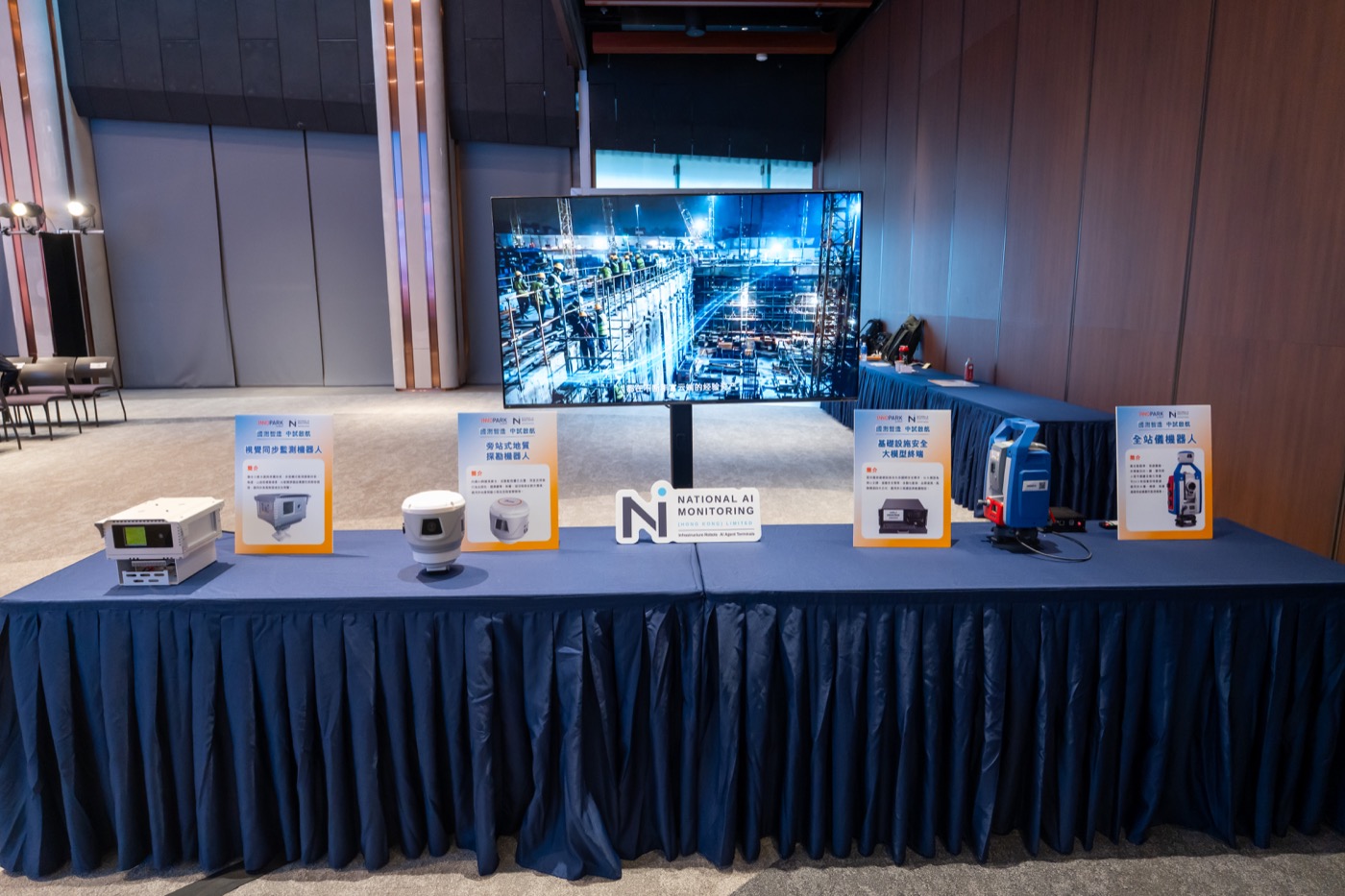
05 / Embodied engineering robots
Perception reasoning and action in the field environment
Embodied engineering systems combine precision measurement, environmental perception, spatial understanding, task planning and controlled execution for hazardous, repetitive or hard-to-reach work.
- Total-station survey robots
- LiDAR-vision monitoring robots
- Geological and site-inspection robots
- AI agent terminals for local orchestration
06 / Application research
One intelligence layer
Multiple critical environments
01Rail construction
02Tunnels
03Bridges
04Slopes & foundations
05Water & energy
06Operations & maintenance
07 / Research discipline
Validation before claims
Research capability is communicated separately from formally tested product performance. Overseas deployment must comply with customer requirements and local rules covering safety, data, cybersecurity, certification and professional responsibility.
- Human-in-the-loop decision control
- Traceable evidence and explainable output
- Private, edge or hybrid deployment options
- Stage-gated testing and field validation
科研方向
垂域大模型 × 智能體終端 × 工程具身機器人
香港研發團隊以基礎設施安全與品質為核心場景,將規範、流程、風險案例、現場視頻、監測數據及工程規則組織成專業知識與推理體系,並通過智能體終端連接監測系統及工程機器人,形成「感知—理解—識別—分析—預測—決策—行動—反饋」閉環。
查看投資者概覽